
table of contents
Share

A well-structured sales pipeline is the backbone of predictable revenue growth. Without it, deals slip through the cracks, forecasting becomes unreliable, and sales teams lose focus.
In this guide, we’ll walk through 10 essential steps to building a clean, efficient, and scalable pipeline—using best practices inspired by HubSpot.
1. Define Your Pipeline Purpose
Before building anything, get clear on why your pipeline exists.
For example:
New Business Pipeline → focused on acquiring new customers
Tracks deals from qualification to close
Ensures consistent forecasting and visibility
A clearly defined purpose keeps your pipeline aligned with business goals.
2. Design a Simple Pipeline Structure
Your pipeline stages should reflect the customer buying journey, not internal processes.
A typical structure looks like:
Prospecting
Discovery
Evaluation
Proposal
Negotiation
Closed Won / Closed Lost
👉 Keep it simple: 5–7 stages is ideal. Too many stages create confusion and slow down sales.
3. Align Stages with Customer Milestones
Each stage should represent a meaningful step for the buyer.
Avoid vague internal labels. Instead, focus on progress from the customer’s perspective—this makes your pipeline more intuitive and actionable.
4. Define Entrance Criteria for Each Stage
Set clear rules for when a deal can enter a stage.
Examples:
Discovery → Meeting booked
Evaluation → Pain points confirmed
Proposal → Pricing discussion requested
Negotiation → Contract shared
This ensures consistency across your sales team.
5. Establish Exit Criteria
Just as important as entering a stage is knowing when a deal is ready to move forward.
Examples of exit criteria:
Discovery call completed
Decision-maker identified
Budget confirmed
Technical fit validated
Mutual action plan agreed
This eliminates guesswork and improves deal quality.
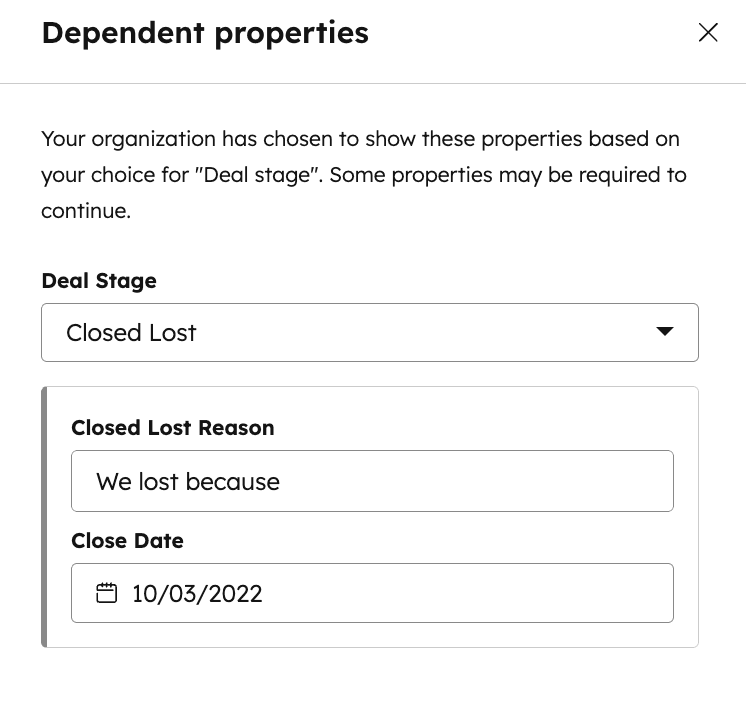
6. Define Mandatory Deal Properties
To maintain data quality, require key fields before advancing deals:
Close date
Deal value
Decision maker
Pain point / use case
Next step + date
Competitors
Implementation timeline
👉 Pro tip: Use automation tools (like data agents or conditional logic) to reduce manual input.
7. Maintain Pipeline Hygiene
A messy pipeline leads to bad decisions.
Regularly clean your pipeline by removing or fixing:
Outdated close dates
Stale deals sitting for months (or years)
Deals without next steps
Deals without owners
Incorrect stage placements
Missing required data
Think of pipeline hygiene as ongoing maintenance—not a one-time task.
8. Visualize Your Pipeline
Use tools like diagrams or flowcharts to map your pipeline clearly.
This helps:
Align teams
Identify bottlenecks
Improve onboarding for new reps
A visual pipeline is easier to understand and optimize.
9. Optimize for Efficiency, Not Complexity
More stages ≠ better pipeline.
In fact, complexity often:
Slows down deal progression
Confuses reps
Reduces data accuracy
Keep your system lean and focused on what actually drives deals forward.
Final Thoughts
Building a sales pipeline isn’t just about structure—it’s about discipline and clarity.
When done right, your pipeline will:
Improve forecasting accuracy
Increase win rates
Help your team focus on the right deals
Start simple, stay consistent, and continuously refine based on real sales data.
about the author

Dominika Dadova
Senior Revenue Operations Consultant
Dominika is a HubSpot consultant specializing in RevOps alignment and ABM strategy for B2B companies. She leads end-to-end HubSpot implementations, from onboarding and audits to advanced integrations and AI-powered workflows. With hands-on experience across Marketing, Sales, Service, CMS, and Ops Hubs, she focuses on helping teams work smarter and closer together.
